Reading the puddle
A dishwasher is fed by a small hot-water line, usually braided steel or copper, that connects under the sink and runs behind the cabinets to a fitting under the machine. Because that line is under pressure all the time, a loose fitting or a pinhole can leak whether the dishwasher is running or not.
If water appears only during a cycle, the drain hose, the door gasket or the pump is more likely. If the floor is wet in the morning before anyone has run the machine, suspect the supply side. Water that is warm to the touch points to the hot supply line. Swollen laminate or vinyl at the toe kick, or a soft spot in the floor in front of the machine, means water has been getting under the flooring for a while.
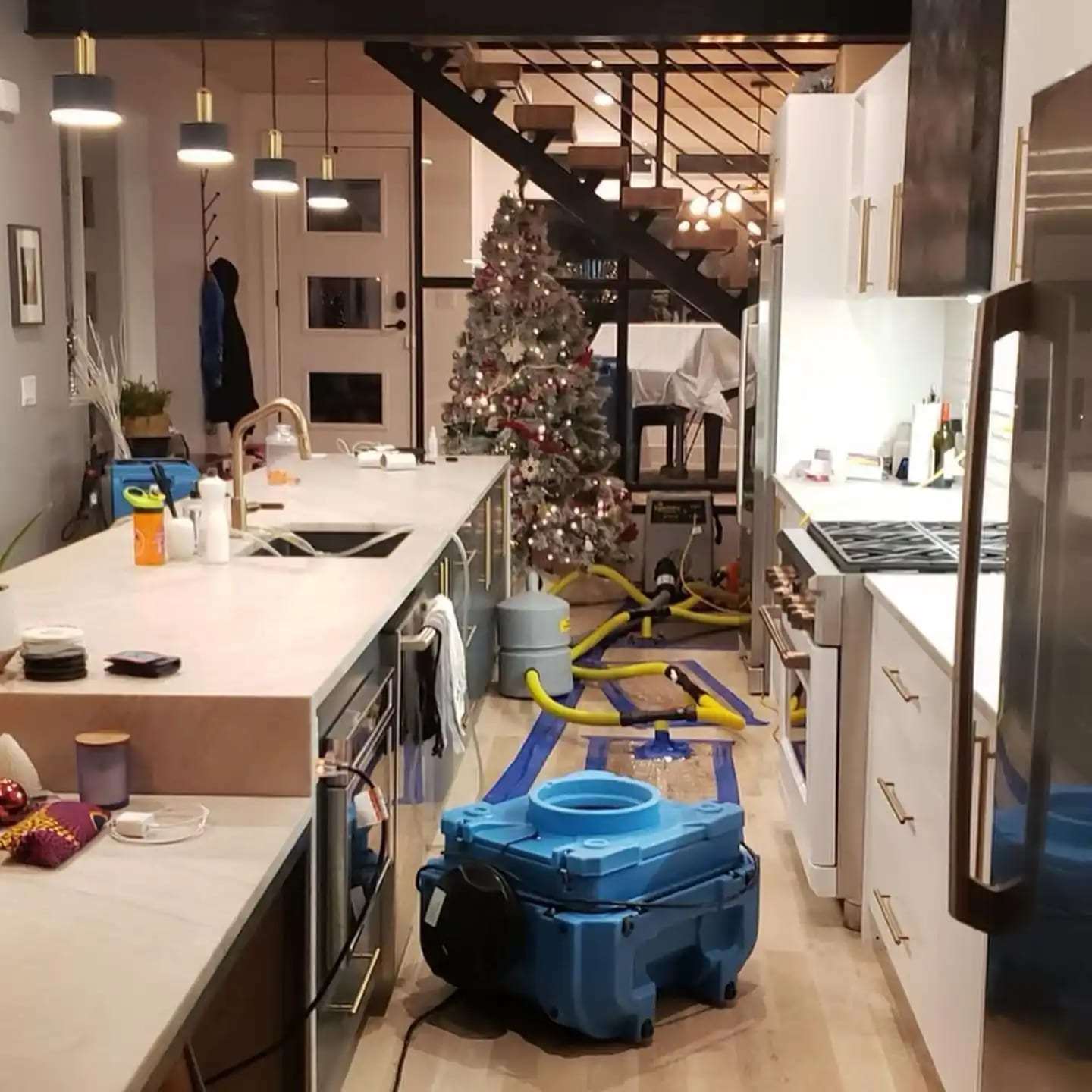
Kitchen with an air mover and drying hoses on the floor beside the island. Example of the work involved; the photo does not show a specific property or a job for this site.
Stopping it and checking the damage
Turn off the dishwasher and its power
Many dishwashers plug in under the sink; others are hard-wired to a breaker. Turn off power before reaching under the machine.
Close the supply valve
The valve is usually under the kitchen sink, often a small multi-outlet valve on the hot line. If it does not stop the water or will not turn, close the main shutoff.
Remove the kick plate
Two screws usually hold the lower front panel. With a flashlight you can often see which fitting is wet and how far water has spread.
Check under the sink and the next cabinets
Water often runs sideways under cabinets. Look at the cabinet floor under the sink and at the bottom edges of neighboring cabinets.
Watch the floor over the next days
Cupping in wood or laminate, lifting tiles or a musty smell near the dishwasher means water is trapped under the floor and needs drying, not just mopping.
Where the water comes from
| Clue | Likely source | Next step |
|---|---|---|
| Wet floor with the machine off | Supply line or fitting | Close the valve; replace the line or fitting |
| Water only during the drain part of a cycle | Drain hose or its connection under the sink | Tighten the clamp or replace the hose |
| Drips at the front of the door | Door gasket or overfilling with suds | Check the gasket; use only dishwasher detergent |
| Water at the back left or right corner | Pump or internal hose | Service call for the appliance |
| Water in the cabinet under the sink | Garbage disposal or sink drain connection | Check the disposal and drain fittings |
Common questions
Can I just tighten the fitting?
A slightly loose compression fitting sometimes stops with a gentle quarter turn. If the line is kinked, corroded or the fitting is cracked, replace it.
Why does the floor feel soft in front of the dishwasher?
Particleboard or plywood under the flooring swells and weakens when it stays wet. That section often needs to be dried or replaced.
General information for Englewood, not a quote or professional advice. In an emergency, call 911.