What water does to wood floors
Solid hardwood absorbs water mostly from the bottom and the edges. When the bottom of a board takes on more moisture than the top, the edges rise and the middle sinks, which is called cupping. If someone sands a cupped floor flat too soon and it later dries, the middle of each board ends up higher than the edges, which is called crowning. Gaps open when boards shrink after drying.
Engineered wood, which has a thin wood layer over plywood, can delaminate when wet. Laminate, which looks like wood but has a fiberboard core, usually swells at the seams and does not recover. Many older Englewood homes have original oak floors laid over wood subfloor, sometimes over a crawlspace or basement, and moisture from below can matter as much as the leak above.
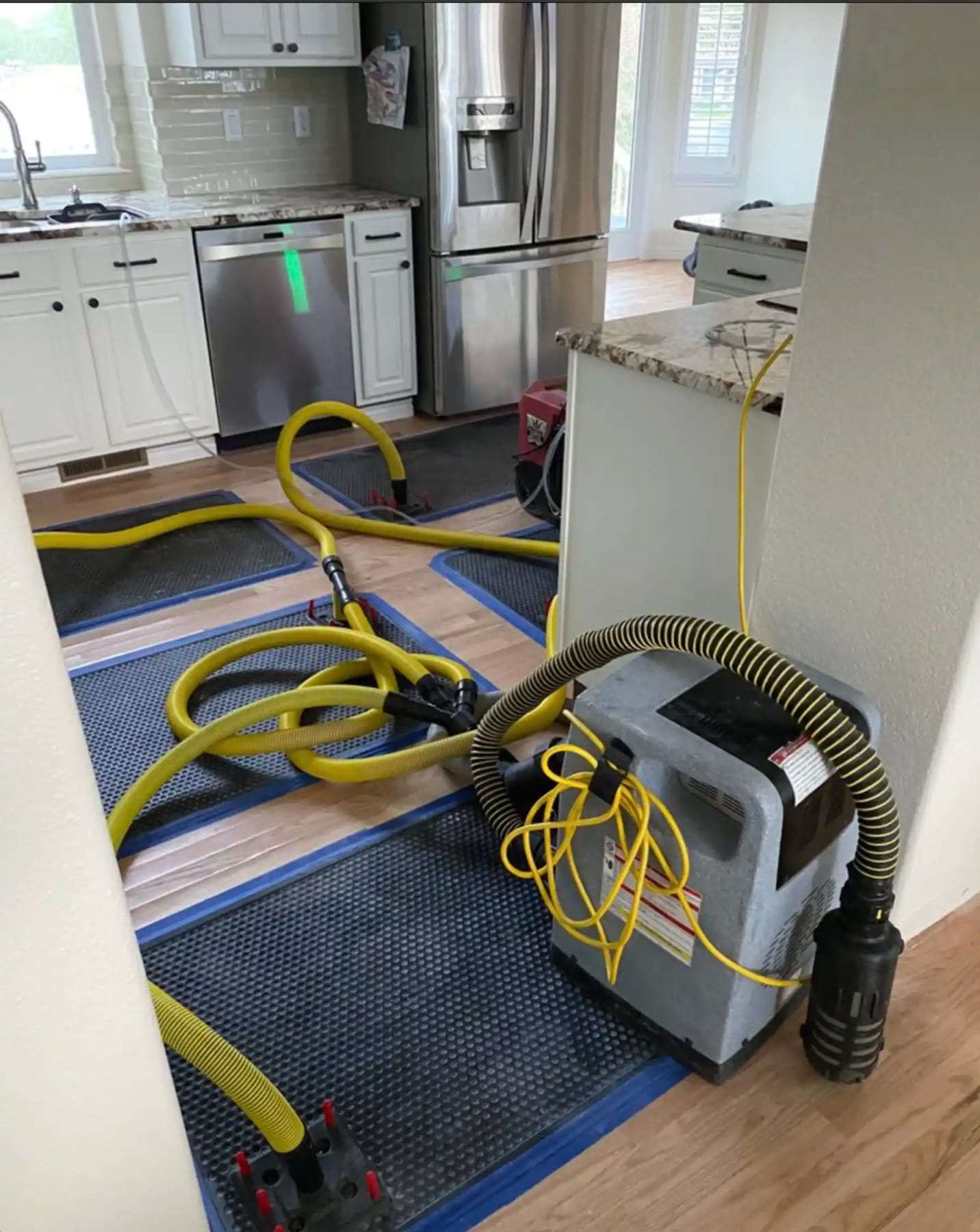
Kitchen floor with drying mats and hoses in front of the cabinets. Illustrative only: this photo is not from a job tied to this site or a specific address.
Often saved versus often replaced
| Often saved | Often replaced |
|---|---|
| Solid hardwood wet for a short time | Laminate with swollen seams |
| Clean water from a supply line | Engineered boards that have delaminated |
| Drying started within a day or two | Floors soaked by sewage or floodwater |
| Mild cupping that relaxes as it dries | Boards wet for many days before drying |
| Subfloor that dries along with the boards | Floors with mold growth underneath |
What to do with a wet wood floor
- IfWater is still on top of the floorThenRemove it right away with towels or a wet vacuum. Do not leave rugs or furniture pads on the wet area.
- IfBoards are cupping in the first daysThenLeave them alone and start drying. Sanding or nailing now usually makes things worse.
- IfA drying company recommends specialized floor dryingThenAsk how they will measure progress and what readings they are aiming for.
- IfBoards are still cupped after reaching dry readingsThenA flooring contractor can judge whether sanding and refinishing will flatten them or replacement is needed.
Common questions
Why is the floor still cupped when it feels dry?
The bottom of the boards and the subfloor may still be wetter than the top. A meter with pins or a non-invasive scanner shows the difference.
Can I put a rug over the wet area while it dries?
No. A rug traps moisture against the wood and slows drying. Keep the floor uncovered and the air moving until readings are back to normal.
General information for Englewood, not a quote or professional advice. In an emergency, call 911.